
Decor trends can look simple on a mood board. Real homes with children rarely stay that way for long. Toys travel, snacks spill, and every room becomes shared space.
That does not mean style has to disappear. It just needs to work with daily life, not against it. The good news is that many 2025 and 2026 trends already lean that way.
Why “family proof” style is trending
Homes are moving away from stark, untouchable looks. Many designers now talk about softer minimalism and curated maximalism. Both aim for warmth, comfort, and rooms that can take a few knocks.
Why trends shift after kids
This section explains why many families stop chasing perfect rooms. It also shows why current trends feel more realistic than past minimal looks. Small compromises often bring more calm than constant redesigns.
Recent coverage highlights cozy minimalism with curved, cushy furniture. For a simple focal point, high-quality canvas art prints can add warmth without adding more surfaces. Modular sofas in tactile fabrics show up often because they suit naps, snuggles, and busy evenings.
At the same time, maximalism is getting a reset. “Curated maximalism” means layered textures, earthy colours, and meaningful objects, not random clutter. These warmer palettes can hide small mess better than bright white schemes.
The key choice is not right or wrong. It is about which story the home needs to tell each day. Both styles can be adjusted over time, and the most useful trends leave space for change.
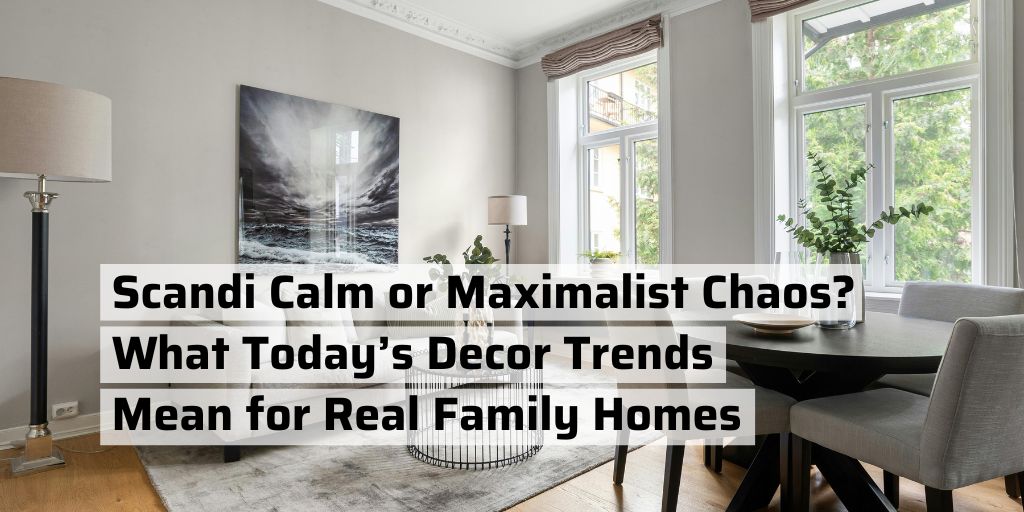
Mixing Scandi calm and curated maximalism often suits family life well. A soft neutral base can carry the room, then colour and texture can come in through flexible layers. This keeps the home warm without making tidying feel endless.
When Scandi calm works best
This section focuses on Scandi inspired rooms and the “cozy minimalism” middle ground. It covers materials and layout choices that suit real family routines. Evidence highlights health benefits of natural light and calm spaces in family homes; see the research review which offers useful context. It can also suit smaller spaces where visual breaks are helpful.
Cozy minimalism keeps the clean look but softens the edges. Designers often suggest forgiving fabrics such as performance linen or Crypton velvet, plus built-in storage. Closed cabinets help rooms look calm, even when toys spread out.
Wall art can also do a lot of work in a tidy scheme. A few well placed canvas pieces can add warmth without adding more objects to dust. Keeping art at adult eye level also helps it stay looking fresh.
Practical Scandi choices that tend to hold up include modular sofas in textured fabrics that hide marks and creases. Storage benches that double as seating can keep rooms flexible. Closed cabinetry keeps colourful toys out of sight, and simple gallery walls add interest without extra clutter. A calm base can give busy rooms a steady feeling, even on loud days.
Kids’ areas can follow the same rule. A calm backdrop pairs well with removable decals, changeable art, and a small collection of favourite objects. This supports personal identity without locking the room into one theme.
Making maximalism feel fun, not loud
This section looks at colour, pattern, and “more is more” styling. The aim is to keep it playful while avoiding constant visual stress. A few repeating colours can help the eye rest.
Maximalism can work well with children when it stays organised. Recent trend reporting links bold patterns and even Art Deco inspired details with practical choices like modular seating and stain resistant fabrics. The result can feel lively, not fragile.
However, some people find visual noise tiring. Several features link quieter rooms with lower stress, which matches general advice on managing overwhelm. NHS guidance on spotting and easing stress offers a useful UK overview.
Nature inspired ideas can bridge the gap. Earthy greens, terracotta, and soft browns add colour while still feeling grounding. When the palette feels steady, pattern becomes easier to enjoy.
Simple habits help the style last beyond one weekend tidy. Clear zones such as a play rug, a reading corner, and a shared family sofa reduce drift. Toys can rotate, with the rest stored in baskets or lidded boxes that suit the room. One adult calm spot, even a chair and lamp, helps the room stay usable.
A family home feels best when it looks lived in and still feels easy to reset. Small daily resets can prevent clutter from turning into stress. The aim is a space that supports routines and play.
Final thoughts for busy family spaces
The most workable decor trends support comfort, storage, and flexibility. Scandi calm suits routines and smaller edits, while curated maximalism can make everyday life feel richer. Both can be adapted so rooms stay practical as children grow.
A helpful test is whether a room can be reset in ten minutes. If the answer is yes, the style is likely doing its job. That approach keeps homes welcoming, even when they are busy.


